
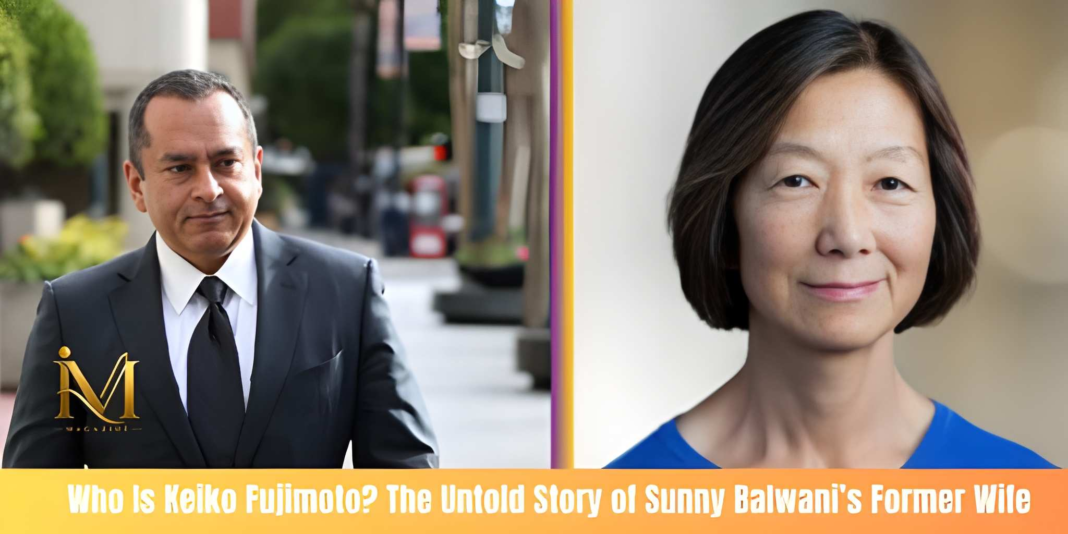

Keiko Fujimoto is most publicly recognized as the former wife of Ramesh “Sunny” Balwani, the former president and chief operating officer of Theranos. She has been described in public reporting as a Japanese artist. The most commonly confirmed detail about her life is that she was married to Balwani before their divorce in 2002. Public information about Keiko Fujimoto is limited, so any discussion about her should clearly separate verified facts from online guesses. Business Insider reported that Balwani was married to Japanese artist Keiko Fujimoto when he met Elizabeth Holmes, and that Fujimoto filed for divorce in 2002. John Carreyrou’s Bad Blood also describes Balwani as being married to Keiko Fujimoto and living in San Francisco when he first met Holmes in 2002.
Who Is Keiko Fujimoto?
Keiko Fujimoto is not a public business figure, celebrity founder, or media personality in the same way as the people connected to the Theranos scandal. Her name became searchable mainly because of her past marriage to Sunny Balwani. That is important because many online articles try to turn a small public record into a full biography. The truth is simpler. Keiko Fujimoto is known publicly for being Balwani’s former wife, and she has been identified as an artist. Beyond that, reliable public details about her childhood, family, education, private life, and current activities are scarce.
This lack of information does not mean there is a hidden story. It usually means the person has chosen a private life or has not built a public image. Keiko Fujimoto appears in the public conversation because Balwani later became part of one of the most famous Silicon Valley scandals. She herself is not known for any role in Theranos, its business decisions, or its legal problems. That distinction matters. A person can be connected to a public figure through marriage without being connected to that public figure’s later actions.
Why People Search for Keiko Fujimoto
People search for Keiko Fujimoto because the Theranos story created curiosity around everyone connected to Sunny Balwani and Elizabeth Holmes. Theranos was once promoted as a company that could change blood testing. It claimed that small samples of blood could be used for many tests through its own technology. Later, government agencies and journalists challenged those claims, and the company became a major example of failed startup hype, weak oversight, and investor deception.
The Securities and Exchange Commission said in 2018 that Theranos, Elizabeth Holmes, and Ramesh “Sunny” Balwani raised more than $700 million from investors through what it described as a years-long fraud involving false or exaggerated statements about the company’s technology, business, and finances. The SEC also said Theranos’s analyzer could only perform a small number of tests and that most patient tests were run on modified or standard commercial machines.
Because of that scandal, readers often look backward into Balwani’s life. They want to understand who he was before Theranos, how he met Holmes, and what his personal timeline looked like. That is where Keiko Fujimoto enters the story. She is part of Balwani’s earlier personal life, not part of the Theranos business story.
Keiko Fujimoto and Sunny Balwani’s Marriage
The marriage between Keiko Fujimoto and Sunny Balwani is one of the few publicly discussed facts about her. Reports connect them to San Francisco before their f. Carreyrou’s reporting notes that Balwani was married to Keiko Fujimoto and living in San Francisco when he first met Holmes in China in the summer of 2002. The same source also notes that by October 2004 Balwani was listed as a single man on a Palo Alto property deed.
This timeline matters because it helps explain why her name appears in articles about Balwani. Their marriage belonged to the period before Balwani became widely known through Theranos. Keiko Fujimoto was part of his life before the company became famous, before the trials, and before the public saw him as one of the central figures in the Theranos case.
Some websites give exact claims about their wedding year, her age, net worth, children, or current location. Those claims should be treated carefully unless they are supported by strong sources. A useful article about Keiko Fujimoto should not pretend that every online detail is proven. The reliable story is much narrower: she was married to Balwani, she was described as a Japanese artist, and the marriage ended in divorce in 2002.
The Divorce Timeline
Keiko Fujimoto and Sunny Balwani’s divorce is usually placed in 2002. Business Insider states that she filed for divorce in 2002, the same year Balwani met Elizabeth Holmes. That timing is one reason her name appears in timelines about Holmes and Balwani. Readers want to know whether Balwani was married when he first met Holmes, and several reports say he was.
This does not mean Keiko Fujimoto should be pulled into the later parts of the Theranos story. The divorce happened years before Balwani officially joined Theranos. Business Insider’s timeline says Balwani became president and COO of Theranos in 2009. That gap is important. It shows that the known marriage and the later company scandal sit in different periods of Balwani’s life.
Was Keiko Fujimoto Involved in Theranos?
There is no reliable public evidence showing that Keiko Fujimoto was involved in Theranos. Her known connection is personal and historical, not professional. She was Balwani’s former wife before his public role at Theranos became the focus of major legal attention.
The Department of Justice said Holmes and Balwani were charged in connection with schemes involving Theranos, including alleged false claims to doctors, patients, and investors about the company’s blood testing ability. The same DOJ page states that Balwani was sentenced in December 2022 to 155 months in federal prison. Keiko Fujimoto is not presented in those official Theranos case materials as a company executive, defendant, witness, or decision-maker.
That is the cleanest way to understand her role. Keiko Fujimoto is connected to Balwani’s personal past. She is not a Theranos figure.
Why Her Privacy Matters
Keiko Fujimoto is a good example of how public curiosity can attach itself to a private person. When a scandal becomes famous, people often search for spouses, former partners, friends, and family members. Sometimes that curiosity is harmless. Other times, it leads to weak articles that repeat guesses as facts.
A fair article should protect the line between public interest and private life. Keiko Fujimoto did not ask to become part of a global business scandal. Her name appears because of a past marriage. That does not give writers a free pass to invent details about her personal life, finances, family, or location.
Good content should say what is known and stop there. That is not “thin content.” That is responsible writing. With Keiko Fujimoto, the truth is limited, and that limit should be respected.
Keiko Fujimoto as an Artist
Keiko Fujimoto has been described in public reporting as a Japanese artist. This detail appears in multiple summaries about Balwani’s early life, including Business Insider’s timeline and Carreyrou’s reporting. However, detailed public information about her artwork, exhibitions, training, or professional career is not widely available from strong sources.
This is where many weak articles go wrong. They take the word “artist” and build a long story around it without proof. A better approach is to keep the statement simple. Keiko Fujimoto was identified as an artist, but her artistic career has not been documented in the same way as the public careers of Balwani, Holmes, or other Theranos-related figures.
That does not make her work unimportant. It simply means the available public record is limited.
Sunny Balwani’s Later Public Role
To understand why Keiko Fujimoto became searchable, it helps to understand Balwani’s later role. Ramesh “Sunny” Balwani was a technology businessman who became president and COO of Theranos. He was closely tied to Elizabeth Holmes both personally and professionally. Their relationship and leadership roles became central parts of the Theranos story.
According to the Department of Justice, Balwani was sentenced to 155 months, or 12 years and 11 months, in federal prison for fraud that risked patient health and defrauded investors. Reuters later reported that a U.S. court upheld the convictions of Holmes and Balwani in 2025, rejecting claims of legal errors in their separate trials.
This public downfall is why people look into Balwani’s earlier life. But again, Keiko Fujimoto should not be treated as part of his later wrongdoing. The known facts do not support that.
What Makes Her Story Different?
Keiko Fujimoto’s story is different because it is mostly a story of privacy. Many people connected to famous cases become public by choice. They give interviews, write books, appear in documentaries, or build a public platform. Keiko Fujimoto has not done that in any major public way.
That makes the article harder to write, but also more important to write carefully. The goal should not be to stretch her life into a dramatic biography. The goal should be to explain why her name appears, what facts are supported, and what readers should be careful about.
In simple terms, Keiko Fujimoto is known because she was once married to Sunny Balwani. She is described as a Japanese artist. Their divorce happened in 2002. After that, Balwani’s life moved into the Theranos chapter, while her public presence remained extremely limited.
Common Claims That Need Caution
When searching for Keiko Fujimoto, readers may find articles that list exact personal details such as her birthday, height, net worth, children, or current residence. The problem is that many of these claims appear without strong sourcing. Some sites repeat the same details from each other, which can make weak information look more believable than it is.
This is common with people who are connected to famous figures but are not famous themselves. Content websites often try to fill gaps because they want a complete profile. But a complete-looking profile is not always an accurate profile.
For Keiko Fujimoto, the safest approach is to rely on the few facts supported by better-known reporting: her name, her connection to Balwani, her description as a Japanese artist, and the 2002 divorce timeline. Anything beyond that should be treated as unconfirmed unless backed by reliable documents or respected reporting.
The Theranos Connection Explained Simply
Theranos was a health technology company that promised a new way to run blood tests. The company claimed it could perform many tests with very small blood samples. This idea attracted investors, media attention, and public excitement. But investigators and journalists later found serious problems with the company’s claims.
The SEC said Theranos and its leaders misled investors through claims about its technology, business performance, and financial results. It also said the company claimed its products had been used by the U.S. Department of Defense when they had not. The DOJ later described the case as involving false claims to patients, doctors, and investors about the accuracy and reliability of Theranos blood testing.
Keiko Fujimoto’s name appears near this story only because of her previous marriage to Balwani. She was not part of Theranos’s leadership, and there is no solid public evidence connecting her to the company’s operations.
Public Interest vs. Private Life
There is a real public interest in the Theranos scandal. People want to understand how a company valued so highly could collapse so badly. They want to understand the roles of Holmes, Balwani, investors, regulators, journalists, and whistleblowers. Those are fair topics.
But Keiko Fujimoto is different. She is not known as a founder, executive, investor, regulator, or public spokesperson. Her connection is personal history. That makes privacy more important.
Writers can still explain who she is, but they should do it with care. They should avoid turning a former marriage into a full scandal narrative. Keiko Fujimoto deserves to be discussed through confirmed information, not through guesses.
Final Thoughts on Keiko Fujimoto
Keiko Fujimoto is best understood as a private individual whose name became public because of her former marriage to Sunny Balwani. She has been described as a Japanese artist, and public reporting connects her to Balwani before his Theranos years. Their divorce took place in 2002, long before Balwani’s later conviction and sentencing connected his name to one of Silicon Valley’s most famous scandals.
The important point is simple: Keiko Fujimoto is not a Theranos executive, not a public business figure, and not someone shown by reliable sources to be involved in the company’s actions. Her story should not be stretched beyond the facts. Readers searching for Keiko Fujimoto should understand the basic timeline, but they should also be careful with unsupported online claims.
FAQs About Keiko Fujimoto
Who is Keiko Fujimoto?
Keiko Fujimoto is publicly known as the former wife of Ramesh “Sunny” Balwani, the former president and COO of Theranos. She has also been described as a Japanese artist.
Was Keiko Fujimoto married to Sunny Balwani?
Yes. Public reporting says Keiko Fujimoto was married to Sunny Balwani before their divorce in 2002.
Was Keiko Fujimoto involved in Theranos?
No reliable public source shows that Keiko Fujimoto was involved in Theranos. Her connection is through her former marriage to Balwani.
Why do people search for Keiko Fujimoto?
People search for Keiko Fujimoto because Sunny Balwani became widely known through the Theranos scandal, and readers became curious about his earlier life.
Is there much public information about Keiko Fujimoto?
No. Public information about Keiko Fujimoto is limited. Many personal details online are unverified and should be treated with caution.